Evensong at Westminster Abbey

Approaching 5.00 p.m. on a cool, windy summer afternoon, Emmy and I join a queue filing into Westminster Abbey for the daily Evensong service. Vergers usher us to places in a block of folding chairs at the junction of the nave and transepts (called “the theatre”) under columns of time-polished stone that disappear into the ornate, peaked-arch roof more than 30 metres above us.

Westminster Abbey's interior hushes you and compels you to look upwards. (Wikipedia open-access image)

The ambience imposes a kind of hush. The vergers in black capes with bright red collars stride silently back and forth, pointing, whispering, bobbing. A group of teenagers wearing “I ❤ NY” tee-shirts sits nervously exposed in the front row. One of them pulls the ear bud of an iPod from his ear and hurriedly stuffs it into his shirt pocket. Three tiny Japanese ladies sit with smooth upturned faces, open-mouthed and silent. An old bent woman in a grimy gabardine overcoat comes by pushing a walking frame. A small squad of beefy, crew-cut young men, wearing white dog-collars of the priesthood, point and nod and murmur in German. A young tourist tries to cram her backpack into the space under her chair as if she is settling into an airline seat.

Exactly at five o’clock a very high, thin, scarcely audible note beams like a laser from the organ. Slowly it swells and cascades into a complex glissando. It is joined by a pitchless rumbling from deep in the stomach of the organ, and the space between upper and lower registers is filled in with a quiet but intricate play of melody. The effect is ethereal, an ornate structure of glittering sound filling the air like an audio-abbey.

The theme of the service is Abraham’s unwavering faith. He is a model of the obedient believer, willing to personally sacrifice his own son if God asks this of him. The presiding priest tells the story in a curiously matter-of-fact tone:

And they came to the place which God had told him of; and Abraham built an altar there, and laid the wood in order, and bound Isaac his son, and laid him on the altar upon the wood. And Abraham stretched forth his hand, and took the knife to slay his son. And the angel of the Lord called unto him out of heaven, and said ‘Lay not thine hand upon the lad, neither do thou any thing unto him: for now I know that thou fearest God.

The narrowly avoided sacrifice presages a later sacrifice that goes ahead uninterrupted. The choir celebrates it in a long, complex and beautifully exuberant anthem.

The Paschal Lamb is offered, Christ Jesus made a sacrifice for sin. The earth quakes, the sun is darkened, the powers of hell are shaken, and lo he is risen up in victory.

The fading sun – dyed purple and bright yellow from its passage through distant reaches of stained glass – slants across the congregation. The versicles and responses are intoned in a high, half-spoken half-sung monotone, passing back and forth between the priest and choir.

O Lord save thy people
And bless thine inheritance
Give peace in our time, O Lord
Because there is none other that fighteth for us, but only Thou O God

For once, I’m finding it hard to be unmoved. Evensong at Westminster Abbey is a confusing experience. I cannot be the snarling, sabre-toothed atheist I would like to be.

But equally I cannot quiet the thought that Evensong – with the power of the ambient architecture, the power of the words, the power of the music – is largely (but not entirely) about stifling understanding in the interests of privilege. With a rush of pure beauty the choir sings:

He hath put down the mighty from their seat
And hath exalted the humble and meek.
He hath filled the hungry with good things
And the rich hath he sent empty away.

I look around. Everything in the Abbey contradicts – even mocks – these words. Of the many hundreds of thousands of hands that shaped the stones, painted the windows, chiselled the ornate woodwork and worked high above the ground hanging from flimsy scaffolding, not one is represented, let alone named, in the inscriptions and busts and reliefs that crowd the walls and floors of the building. And this in a building in which the words “he hath exalted the humble and meek” can resound with such mesmerising harmony.

And behind the ancient story of Abraham’s near-miss murder of his son – with its metaphors of unwavering obedience, sacrifice and redemption through death – lies an unspoken, and probably wholly unnoticed, but very modern lesson: fundamentalism, fanaticism, terrorism and war find their deepest roots in stories like this.
Lunch at Auntie’s Tea Shop

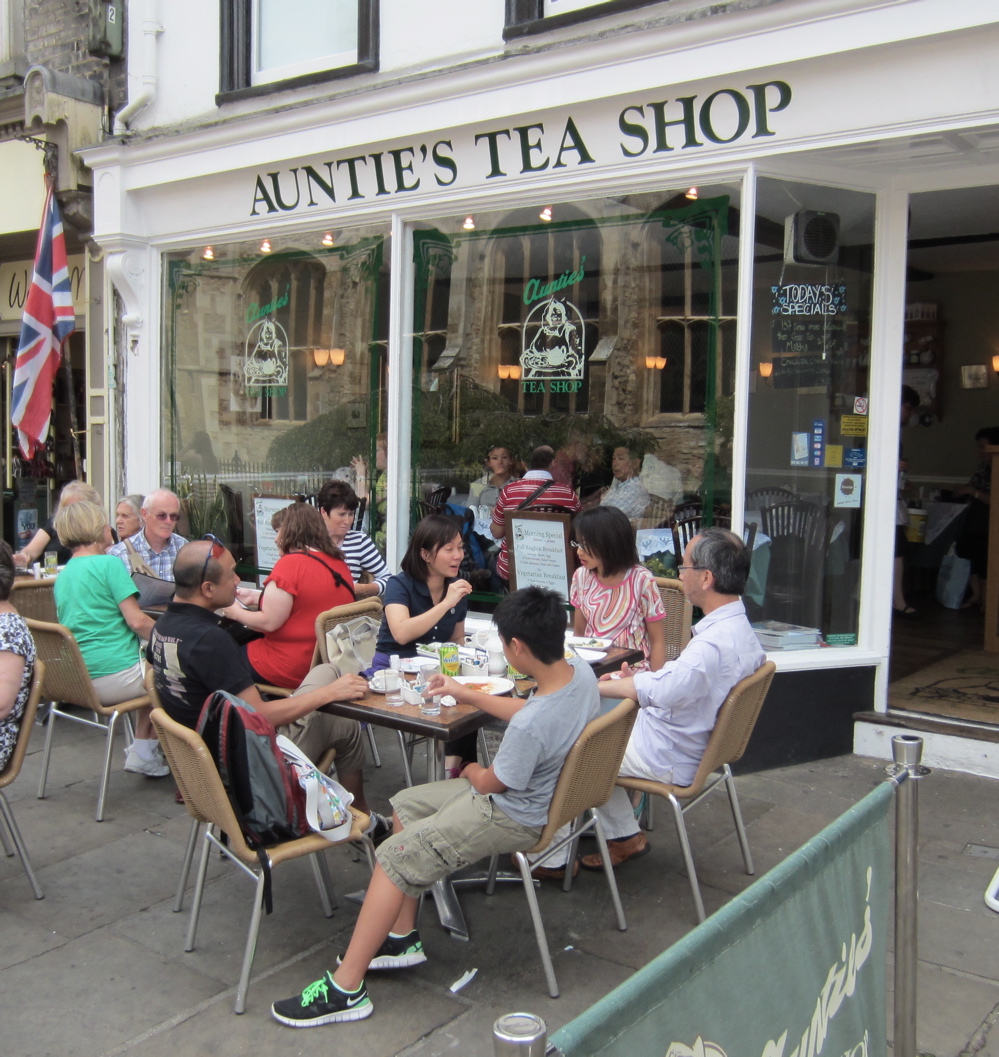
Auntie’s Tea Shop is on St Mary’s Passage just off King’s Parade in the centre of Cambridge. It is only a minute’s walk from the soaring, echoing vastness of Kings College Chapel. After a morning walking around the icons of Cambridge the very name “Auntie’s Tea Shop” was an irresistible relief to Emmy and me. Images of fluffy English scones and delicately flavoured tea had already been disturbing our admiration of the town’s gothic and georgian magnificence.

Auntie's irresistable tea shop

We took a quick look inside. It was very reassuring. Several grey-haired ladies and balding gentlemen were seated primly at smallish tables draped in lace tablecloths. Huge porcelain teapots were being tilted over delicate cups. Waitresses in demure black uniforms with white collars and white pinafores glided between the tables with trays of cakes lying among mini-mountains of whipped cream.

We ordered lunch. I had ham and brie panini, Emmy had a huge chicken salad. The food was good, and naturally we ordered tea – English tea. This too was as delicious and refreshing as we imagined it would be. Peering out the front window over the heads of diners on the footpath, I took in Great St Mary’s Church across the street where Richard III,  Elizabeth I, Cardinal Woolsey, Oliver Cromwell and countless others once rustled their robes over the flagstones of its floor. Tea shop and ancient church… at last, the real England in one glance!

Auntie's huge chicken salad

This reverie was interrupted by a strongly accented voice.

“Sirrr, you like for leetle beet morrr tea?”

The waitress stood deferentially beside our table, her pen poised above a note pad, her gleaming blond hair in two plaits coiled into a bun at the nape of her neck. Polish? Czech? Ukrainian?

As we ordered more tea two young women wearing head scarfs, long black coats and Reebok trainers came into the shop. There was a whispered conversation with another of the waitresses.

“Just for prayers?” we heard the waitress ask.
“Yes, just for prayers”

A moment later five more young Muslim women filed into the shop and headed out to the rear. A short while later they returned, quiet and polite, and filed out again into the sunlight of the street.

In its appearance – like the great Christian monuments of Cambridge – Auntie’s Tea Shop is quintessentially English in the carefully crafted “traditional” sense. But when Muslims pray in tea rooms, and Ukrainian waitresses serve cream scones with jam, we know that something has changed deep down. They have become part of “England” and in becoming English they have deeply changed that “England”.

Inside Auntie's: olde Englishe tea served with eastern European accents

Of course I knew a bit about this new England from statistics, documentaries, Bend It Like Beckham, Zadie Smith, tandoori curries, the Kumars at Number 42 and a million other manifestations and caricatures of England’s migrant culture that have infiltrated into the perceptions of distant Australia.

But I needed an image to hold on to, and at a micro level, Auntie’s Tea Shop in gothic Cambridge is that image. In my mind’s eye – whether accurately or wildly wrong – Auntie’s Tea Shop has now taken up residence as the stereotyped embodiment of today’s England.

24 hours of airline food

The advice was unanimous. If you are flying long distances, eat as little as possible and drink as much as possible. (The last part of this advice was spoiled by a caveat: no alcohol.)

I did the opposite. I ate everything that was put in front of me, and drank only the minimal ration of fluid that came with each meal. This was a mistake. I should have taken the advice. That’s why I arrived in London feeling less than sharp. Not ill exactly, but slightly queasy. And it wasn’t all jetlag and dehydration. More than anything, I think it was the food.

Here’s what I ate, with each meal and snack rated on a scale of one to five.

Chicken and brie focaccia sandwich (Canberra Airport snack bar, midday).  The two slices of focaccia bread were lightly toasted. Between them were pieces of roasted chicken, with brie that had melted under the heat of the toasting process, plus shredded basil leaves. The chicken retained some remnants of moistness. The brie was warm, bright yellow, and runny, but luckily there wasn’t too much of it. What lifted this snack was the sharp and delicious hint of basil. The toasting gave the bread a pleasantly fine veneer of crispness. This snack was well above the average, but from here it was all downhill. ★★★★✩

Ginger muffin (Qantas in-flight snack, mid afternoon between Canberra and Sydney) The flight from Canberra to Sydney takes 40 to 50 minutes, so there is scarcely time for the stewardess to drop a cardboard box in your lap before she is back again, hovering, ducking, leaning, trying to grab back what she has just given you, suggesting you stuff the remnants of your snack into a kind of sick-bag that comes with it. Inside the cardboard box lies a puffed-up tennis ball of cellophane with a brown object inside – a ginger muffin. The muffin is quite moist, very sweet, speckled with tiny currants and carries a strong, almost smellable, flavour of ginger. Edible, but only just. ★★✩✩✩

Vegetarian pasta (British Airways dinner, early evening between Sydney and Bangkok) The main course came with an entrée of coleslaw salad (not bad, fairly crunchy) and a dessert of white mousse (nice and light but ultra sweet). Peeling back the aluminium foil on top of the main dish revealed a mini-swamp of macaroni in white sauce. Green peas decorated the surface, like frogs talking a quick breath before diving, and fragments of red carrot floated here and there like discarded Coke cans. Inserting a plastic fork revealed that the sauce had congealed. You could lift the contents of the dish to your mouth in grainy lumps. The flavour was bland. ★★✩✩✩

Pastrami roll (British Airways snack, served around midnight prior to stopover in Bangkok) The slice of dark pastrami beef – wiped with a blackish mustard – lay between two halves of a bright white, floury-crusted, sourdough bread roll. The meat and mustard tasted OK, though neither looked very appetising. But the bread was a disaster: stale, tough and flaky. ★★✩✩✩

Braised pork with rice (British Airways dinner, served in the small hours of the morning after departure from Bangkok) The pork squirmed at the right hand end of the small dish, jostling with rice in the middle and vegetables to the left. The pork was truly horrible, almost unrecognisable as meat, with a kind of unpleasant, slightly bitter bite in its flavour. The rice was mushy. The vegies were grossly over-cooked. After eating this concoction I reached with gratitude for the dessert, a Kit Kat chocolate bar. And a small bottle of Spanish tempranillo wine was smooth and generous enough to erase the barbaric after-taste of the pork. No stars for the food though. ✩✩✩✩✩

“English breakfast” (British Airways, served at 4.30 a.m. on approach to Heathrow). Two kinds of breakfast were on offer, “Omelette” and “English”. I chose the latter, but glancing surreptitiously around I concluded that the two breakfasts weren’t much different. Mine had a chicken sausage, half a fried tomato and some rather slimy brown lumps which were probably champignons although they had no recognisable flavour. The main component of the meal was scrambled eggs between two slices of ham. The ham was excellent – lightly cooked and quite flavoursome – but the scrambled eggs had been pressed into a block that could be lifted en masse like a small brick. A tiny serving of diced fruit delivered some freshness to the mouth at the conclusion of the meal. ★★★✩✩

So… looking back over my nutritional intake during those long 24 hours, I think I know why I saw Heathrow swaying slightly through a filmy haze.

Morgan Spurlock’s film Super Size Me documents the drastic effects on his physical and psychological health of one month spent eating nothing but McDonald’s food. Morgan… for your next act, try 24 hours locked into an airline diet. The food wasn’t all bad news, but it was mostly bad news.

Long distance walking then and now

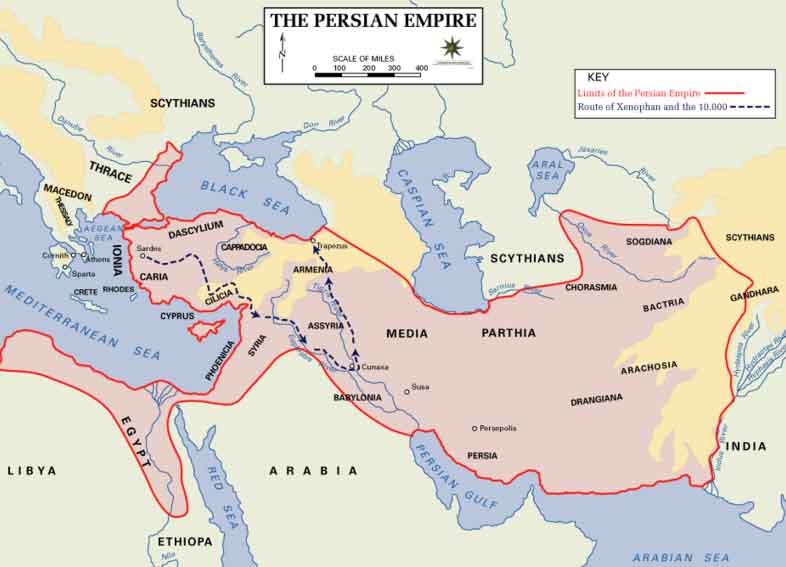
I’ve just finished reading what must be one of the most enthralling accounts of a long distance walk ever written, and it comes from the dawn of recorded history around 2,500 years ago. Xenophon’s Anabasis – titled The Persian Expedition in Rex Warner’s English translation – is an account of his trek with a column of 10,000 Greek mercenaries from Sardis (in today’s western Turkey) to a spot near Babylon (south of modern Baghdad), then north through what is today Kurdistan and eastern Turkey to the Black Sea, and from there back along Turkey’s north coast to Greece. The total distance covered was about 3,500 kms over a period of less than two years (401 – 400 BC).

As an elected officer in his army (yes, Greek soldiers elected their officers) Xenophon must have spent a lot of the journey on horseback, but his men, and a small number of female retainers, walked the whole way. From time to time there are memorable snapshots that capture what they endured. Here is one taken in central Turkey under the deep snows of mid winter, probably early in 400 BC.

“Soldiers who had lost the use of their eyes through snow-blindness or whose toes had dropped off from frostbite were left behind. It was a relief to the eyes against snow-blindness if one held something black in front of the eyes while marching; and it was a help to the feet if one kept on the move and never stopped still, and took off one’s shoes at night. If one slept with one’s shoes on, the straps sank into the flesh and the soles of the shoes froze to the feet. This was the more likely to happen since, when their old shoes were worn out, they had made themselves shoes of undressed leather from the skins of oxen that had just been flayed. Some soldiers who were suffering from these kinds of complaints were left behind.” (Part IV chapter 5)

And every modern walker who has arrived exhausted at the end of a long hike will instantly recognise the feelings of Xenophon’s soldiers as they emerged from the mountains of Turkey at the town of Trabzon on the Black Sea.

“Leon of Thurii stood up and spoke as follows: ‘Speaking for myself, soldiers, I am already tired out with packing up baggage, and walking and running, and carrying arms, and marching in the ranks, and going on guard, and fighting. What I want is to have a rest now from all this, and since we have now got to the sea, to sail for the rest of the way, and so get back to Greece stretched out at my ease on deck, like Odysseus.’ When they heard this, the soldiers shouted out in support of the speech.” (Part V chapter 1)

These are people pretty much like us. But there is one big difference between long distance walking in ancient times and long distance walking today. Until quite recently walking was a mode of travel, simply a way – for most people the only way – of getting from A to B. Perhaps it was the ancient counterpart of today’s commuting – an unavoidable and tedious necessity.

But today walking is a leisure choice. Walking, especially long distance walking, is an instance of what the great and endearingly grouchy sociologist Thorstein Veblen called “conspicuous leisure”. You walk, not because you need to but because you can and you want to display to the world that you can.

Veblen sees conspicuous leisure – including sports and religion – as a sub-category of conspicuous consumption, that is, the waste of money and/or resources by people in a way that publicly demonstrates the distinctiveness or status of a person or group. He argues that modern leisure activities – I suppose he meant things like sewing, gardening, playing golf, gourmet cooking etc. – are survivals of ancient barbarian drudgery that have been stripped of their utilitarian functions, romanticised and boosted with powerful symbolic decoration in order to cover up the idleness of the people who engage in them basically to lift or sustain their status.

The epic walk of Xenophon's ten thousand. (Source: Wikipedia public domain image)

The Greeks of Xenophon’s column – like resigned and weary modern commuters – did not walk to boost their status in the eyes of the hoi polloi. They did not romanticise their experience, they did not transform it into a “philosophy”, they did not celebrate it as a physical or mental challenge. It was just everyday drudgery.

Perhaps some day in the future the drudgery of commuting (for example) will become a leisure-time indulgence of the middle-class with all the elaborate trappings of golf, quilting, long distance walking and a thousand other pastimes. People will drive back and forth not because they have to, but because they can. It will become a hobby, and people will romanticise it, as today we romanticise walking.

Walking with the birds

When you walk the bush paths of Canberra you are never alone. Even in the quietest spot you will see a slight movement from the corner of your eye, something flitting just beyond the edge of your vision. A leaf will stir, there will be a scurry in the trees, a muted rattle or a rapid whispered clucking. Sometimes you get the feathered equivalent of a stampede, a sudden rush of squawks, and beating wings and wild shrieks. Sometimes you may hear the solitary, mad cackle of a kookaburra, taken up by the mocking echo of half a dozen others.

Here are just a few of the show-offs, eccentrics and recluses you are pretty sure to meet when you’re out walking.

Galahs grazing

Galahs. These are probably the most common parrot you will see along the walking paths of Canberra. Galahs are notable for their unique and beautiful pastel-coloured plumage. They have pink breasts, necks and faces, but light grey wings and tails. They wear a white cap on their heads. They are the clowns of Canberra back yards. Sometimes they will show off, hanging upside down from a power line or a clothes line. Occasionally… just to impress you more, they will release one foot and nonchalantly hang clasping the line with the other claw. They like to have rowdy arguments about nothing, like two drunks standing side-by-side, pumping and puffing and squawking at each other. Like cockatoos, galahs also like to graze. Sometimes you see large flocks of them combing the grass beside the major thoroughfares of Canberra, unconcerned by passing traffic (but with the odd careless one squashed and smashed on the asphalt of the road).

Magpies. These are meat-eaters who will gather over road-kill like mini vultures, jabbing and plucking and scattering when cars pass. They speak to one another in a beautiful, mysterious language. They throw back their heads and warble, quite loud and very musically, in three- or four-second bursts, like sentences.

Wild magpies demanding a handout

They are beady-eyed intellectuals, inquisitive, and largely unafraid of humans. They stride over lawns, stopping from time to time with tilted heads as if listening. Apparently they can hear insects – even worms – moving in the earth beneath them. Their plumage is basically black with a saddle of white on the backs of their necks and streaks of white in their wings and tail. They have good memories. If you give them a handout of raw mince they will never forget your generosity. Whenever they see you they will come gliding and running, demanding another handout, even if months have passed since the first.

Always in pairs: the common rosella

Rosellas. These are smallish parrots with plumage of brightly contrasting red and blue. Young rosellas also have green plumage. Rosellas are very timid but endearing, because they always appear in faithful pairs, presumably male and female. They look after each other.

Sometimes one will stand guard high in a tree while the other drinks. Then they will reverse roles before racing off. They have a unique call, a thin tweet that starts high, jumps down one octave, then back up an octave and quickly down one octave again: deedadeeda.

An army marches on its stomach: cockatoos bulking up in a Canberra park

Sulphur-crested cockatoos. These are the vandals and loud-mouth angry-boys of the bush. They are gregarious birds with a hoarse, raucous, grating call. They get very excited at dawn and sundown, swooping and squabbling in tribe-like clusters. If the spirit takes them, they will settle in certain trees and tear them to pieces, littering the ground with twigs and shredded leaves. They like to graze like cows, but when they find a tasty seed they lift it to their beaks in claws that operate like a robotic hand. They disguise their violent impulses beneath a habit of spotless white plumage. The yellow plume on their heads can stand up like an open fan and they look around like indignant, offended teenagers with yellow mohawk haircuts.

Black Swans. These proud, beautiful birds revel in their status as exceptions to the orthodoxy that “swans are white”. But they also have bright red beaks and usually a flash of white at the base of the tail. They are family birds. They dote on their children and cruise the lake shores showing them off.

Watching the walkers: black swans in Canberra’s Lake Burley-Griffin

The cygnets grow up with grey plumage and only gradually change to black when they are quite big. Swans are curious about humans but are easily irritated by them. Sometimes they will heave themselves out of the water and approach you with a menacing cobra-like sway of the head. If that happens it’s usually advisable to retreat.

Cynical thoughts at the foot of the Eiffel Tower

About five years ago Emmy and I visited Paris. We spent five days in a very large corner room on the top floor of the Regina Hotel overlooking the Tuileries Gardens. To our Australian eyes the hotel was an exotic, somewhat overstuffed, and very over-priced, baroque extravagance. But we really enjoyed it. The weather was clear and warm, and we had a dress circle view of spring suddenly jumping in vivid green from the trees and shrubs in the gardens below.

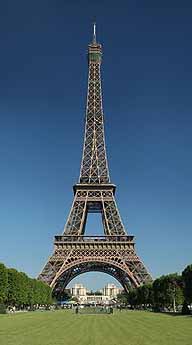
The Eiffel Tower: a tarnished icon?

I was in Paris to do just one thing… enjoy coffee and croissants in a streetside café somewhere along the Champs Elysees. But Emmy had higher ambitions. Versailles. Monet’s Garden. Cruising the Seine. Notre Dame. The Eiffel Tower.

On the first day we had lunch at a restaurant in the tangle of streets across the river. We chose a place at random. At the door we were greeted by a magnificent waiter – long white apron, starched serving cloth draped over his forearm, even a Poirot-like mini-moustache. This was the Paris of movie stereotype.

With great ceremony he conducted us to a table with the classic snowy tablecloth, gleaming cutlery and long stemmed wine glasses. He seated us with a flourish of politesse and handed us the menu. Better and better… not a single syllable of English despoiled the menu, and I understood not one word of it. This was the real France. I looked up:

“What do you recommend?”

From over my shoulder the waiter’s finger roved the menu. He glanced thoughtfully at me for an moment, then…

“For you, monsieur, I recommend ze steak and chips.”

Emmy had an aromatic cassoulet dish freshly made on the premises, served with crusty bread and a counterpoint of soft red wine. But my steak and chips with a Coke were also fine. Plenty of salt too.

The following day we got up early and went to the Eiffel Tower. It was a weekday and not yet into the tourist season, but already a mass of people were corralled in queues before the ticket boxes. It took an hour of zig-zag shuffling before finally we were able to squeeze into a lift and make it up to the second deck.

The view was dazzling – when we could see it, that is. For me, standing 194 cm in height, the crush at the balustrades was not a big problem. I could look over heads and see everything (or almost everything). But Emmy had to jostle and burrow and scrummage. And she had some very ruthless competition.

Feeling a little deflated we had lunch at a buffet cafeteria on the first level. It was one of the worst meals I’ve ever eaten. Indeterminate organic matter wrapped in soggy paper washed down with lilac coloured lolly-water. If only I had ordered steak and chips.

Back on the ground we looked up at the rows of heads strung like beads along the balustrades of the tower. The Eiffel Tower is a dramatic, historic, even beautiful, structure, and it deserves to attract visitors. But it is being loved to death, or perhaps more accurately, exploited to death. The unavoidable crush of visitors and the fleeting contact they make with the Tower’s mystique, make visiting the Tower a trial. In some respects it’s even unpleasant. The Eiffel Tower embodies the classic paradox of mass tourism: its iconic status has bred a degraded experience. Somehow we were disappointed.

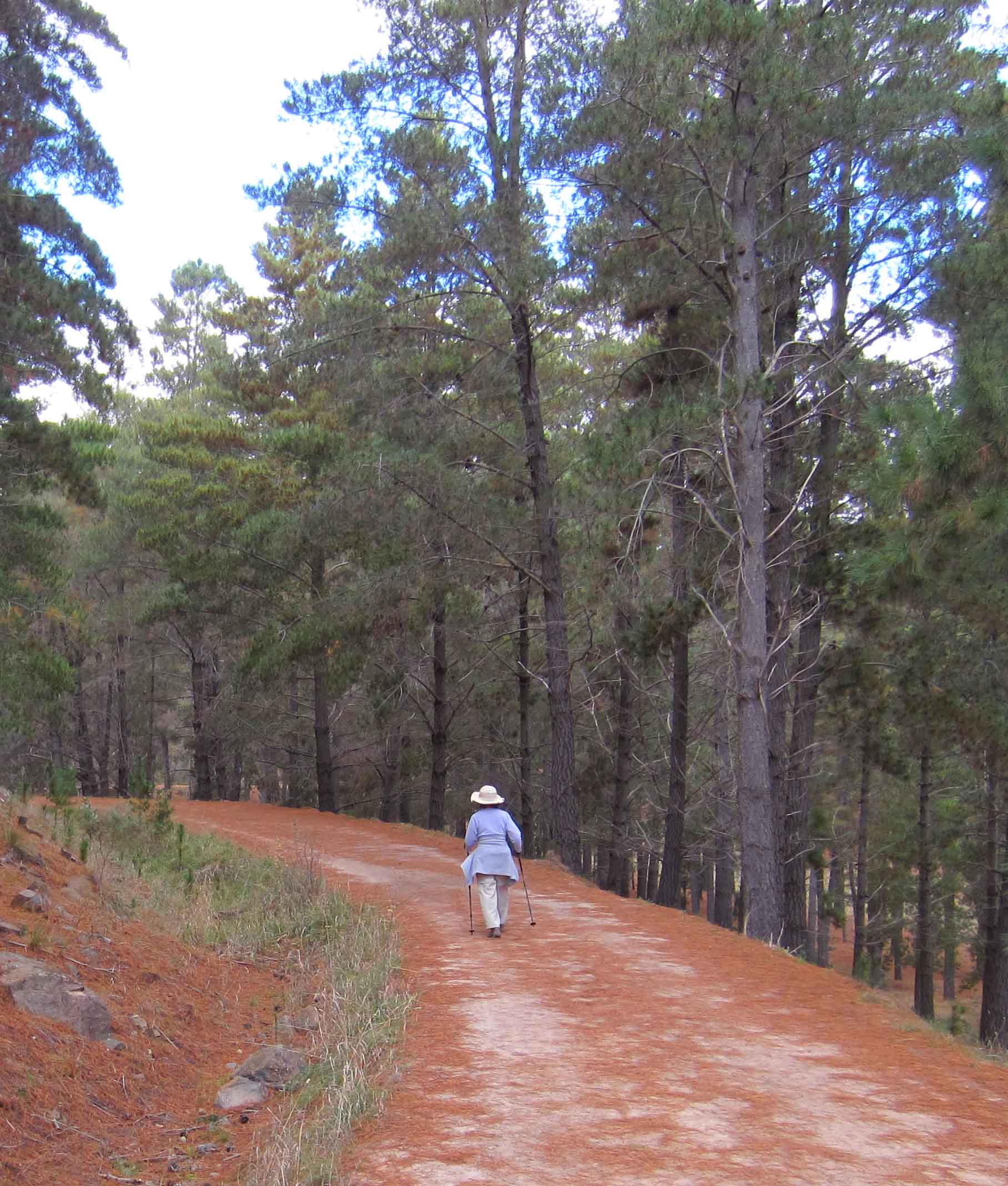
Minimalist travel (with carbon-steel telescopic walking poles).

Right then and there we decided, consumer travel is not for us. You know what I mean by consumer travel. It is travel built around shopping in one guise or another: luxury this and discount that, free day here and extra night there, with “gourmet” meals and “experienced” guides. It is a modular, fleeting, assembly-line world, full of packaged sights seen from the window of a bus and regulated by turnstile. The cruise ship is its purest manifestation, but the Eiffel Tower is now one of its innumerable offspring.

Of course, consumer travel is a soft target and it is very easy to be snooty about it. So it’s frustrating that you can’t escape it. It is hard to be pure and keep consumer travel (a.k.a. “shopping”) at an ideologically comfortable distance. It is virtually impossible to go anywhere without succumbing, somewhere along the way, to the powerful pull of iconic sights and pre-packaged convenience.

But by walking (with our Gore-Tex hiking boots, moisture-wicking merino wool socks, quick-dry insect-repellent shirts, sculptured backpacks and carbon steel, telescopic walking poles) we hope to fend off the worst blandishments of consumerism. How successful will we be? Hmmm, perhaps this paragraph has already answered that question, but we’ll keep you posted anyway.